

By Nedu Okorie
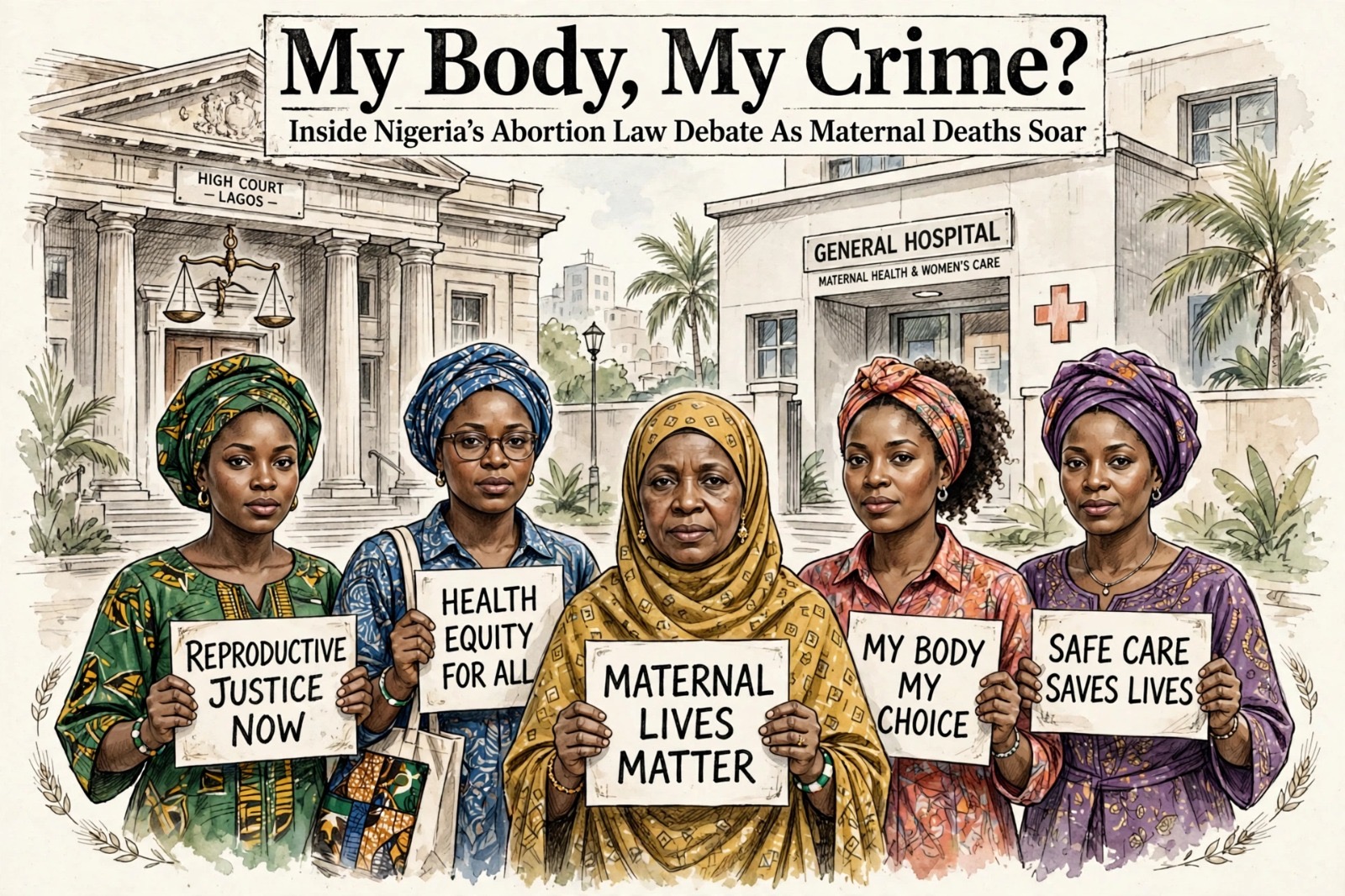
Every year, thousands of Nigerian women die in silence, bleeding out in backstreet clinics, poisoned by unregulated pills, or abandoned by a health system that treats their pain as a moral failure rather than a public health emergency. Recall that on Monday, September 28, 2026, as the world marked International Safe Abortion Day under the theme “Solidarity in Action: Advance Reproductive Justice and Urgently Strengthen Health Systems for Comprehensive Abortion Care,” the Women Advocate Research and Documentation Centre (WARDC) issued a stark warning: Nigeria’s criminalization of abortion is fueling one of the world’s worst maternal mortality crises.
A Nation Bleeding: The Scale of the Crisis
Nigeria recorded an estimated 1,000 maternal deaths per 100,000 live births in 2023, a rate among the highest globally and responsible for nearly 29% of all maternal deaths worldwide. Unsafe abortion is a documented driver of this carnage, yet the country’s Penal and Criminal Codes still treat abortion as a felony, punishable by up to 14 years in prison for both the woman and the provider. WARDC’s call to reform these laws is not abstract activism; it is a plea to stop preventable deaths rooted in shame, poverty, and systemic neglect.
“What About Rape? What About Incest?”: The Human Stories Behind the Statistics
During a recent radio dialogue, a public policy analyst, Mr. Ayo Abegunde raised harrowing realities: daughters impregnated by fathers, women raped by strangers or partners, minors carrying pregnancies that threaten their physical and psychological survival. “Some mothers who can’t bear the shame opt for abortion,” the anchor noted, echoing testimonies collected by reproductive justice groups across Nigeria. Yet under current law, these women are criminals—not survivors.
Mr. Abegunde acknowledged the moral complexity but cautioned against importing foreign legal models. “What is acceptable in other climes might not be justifiable in our own,” he said, pointing to the patchwork of U.S. state laws—where 13 states maintain near-total bans even in cases of rape or incest. His concern was that legalizing abortion without robust enforcement could invite abuse. But he left a critical door open: “If government is able to enforce laws, we should make a case for legal abortion in situations that impinge on the pride and the health of the pregnant woman. For example, underage.”
The Global Context: Solidarity, Not Imitation
The 2026 International Safe Abortion Day theme—“Solidarity in Action”—is not a call to copy Western frameworks but to center African women’s lived realities within a human rights and public health lens. The African Commission on Human and Peoples’ Rights (ACHPR) emphasized that safe abortion is “a cornerstone of health equity and human dignity,” urging states to strengthen health systems, and not just tweak penal codes. Meanwhile, 46 out of 55 African nations have ratified the Maputo Protocol, which explicitly permits abortion in cases of rape, incest, and threats to the woman’s life or health—a provision Nigeria has yet to fully domesticate.
Enforcement vs. Compassion: A False Dichotomy?
Abegunde’s worry about lawlessness is not unfounded. Nigeria’s health sector is riddled with quack doctors, unlicensed clinics, and weak regulatory oversight. Yet as WARDC and other groups have noted, criminalization doesn’t stop abortions, it drives them underground. Women with means travel abroad or access discreet, safe care; the poor resort to herbs, bleach, or untrained providers. The result? A two-tiered system where morality is enforced only on the vulnerable.
Government agencies have made efforts to raid illegal facilities, but as the anchor observed, “more still needs to be done.” Strengthening enforcement must go hand-in-hand with expanding access to contraception, comprehensive sex education, and trauma-informed post-abortion care—especially for survivors of sexual violence.
The Path Forward: Reform Rooted in Nigerian Realities
Nigeria doesn’t need to replicate the U.S. abortion wars. It needs a homegrown framework that:
- Decriminalizes abortion in cases of rape, incest, fetal anomaly, and threats to physical or mental health;
- Protects minors by ensuring confidential, non-punitive access to care;
- Invests in health systems to deliver safe, affordable abortion services as part of essential reproductive care;
- Trains providers in rights-based, stigma-free care;
- Launches public education to shift narratives from sin to survival.
When abortion is safe, legal, and accessible, maternal deaths decline. The question is no longer whether Nigeria can afford reform—but how many more women must die before it acts.