

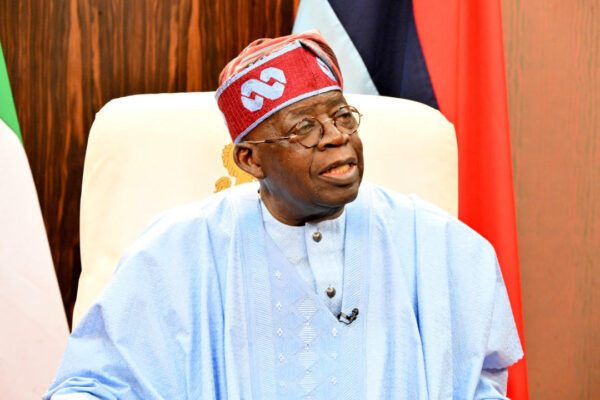
President Bola Ahmed Tinubu said his administration inherited a near-collapsed economy upon assumption of office, describing it as the result of decades of fiscal distortions and policy misalignments that hindered real growth.
He explained that his government was faced with a choice to either continue with “business as usual” or embark on fundamental reforms, noting that his team opted for the latter. According to him, “the path of reform” was chosen over short-term comfort to secure the country’s future.
Tinubu stated that less than three years into his administration, the tough decisions taken have begun to yield results. He pointed out that his government ended the “corrupt” fuel subsidy regime and scrapped multiple foreign exchange rates which, he said, only benefited a few while the majority of Nigerians gained little or nothing from the nation’s resources.
The President stressed that funds saved from these reforms are being channelled into education, healthcare, national security, agriculture, and critical infrastructure, including roads, power, broadband, and social investment programmes.
He added that the reforms have made more resources available to federal, state, and local governments, enabling them to tackle development challenges and improve the living standards of Nigerians, especially at the grassroots.
TVC NEWS.